Check out your Company Bowl for anonymous work chats.

AI adoption is accelerating. Workforce readiness isn’t keeping up. Most organizations are still operating on outdated assumptions: - That hiring solves the problem - That exposure equals capability - That training can remain static In reality, the gap shows up in execution. AI work today requires more than knowledge. It requires the ability to operate in dynamic, interconnected environments where expectations are constantly shifting. That’s where traditional models fall short. And where a new approach to developing talent is emerging. We explore what’s changing and what it means for organizations building AI capabilities
AI is moving too fast for static training models to keep up. What enterprises need now is not generic curriculum built once and recycled for their environment. They need training built to evolve with demand and adapt at the speed of need. That means: - custom curriculum development - client-specific mirrored environments - instructor-led delivery - continuous skill validation - real-world project execution - fast feedback loops The goal is not just to teach technical concepts. It is to build enterprise-ready AI engineers with the context, judgment, and adaptability to contribute in highly specific modern environments. That requires more than content. It requires curriculum agility. #AI #EnterpriseAI #WorkforceDevelopment #EngineeringReadiness
The pace of innovation isn’t slowing down, but traditional hiring models still are. Enterprises need more than talent. They need a way to continuously develop and deploy skilled professionals who are ready to perform from day one. That’s where Smoothstack comes in. We’re changing how the world develops technology talent. Through AI-driven workforce development and skills-based hiring, we turn untapped potential into skills-validated engineers built to accelerate AI adoption and proven for enterprise success.
The future of engineering isn’t just technical; it’s human, adaptable, and AI-aware. If you’re planning to grow as a developer in the next year, these 5 skills should be at the top of your list. Not all of them are taught in school, but all of them matter on the job. Read more to see what’s essential in 2026.
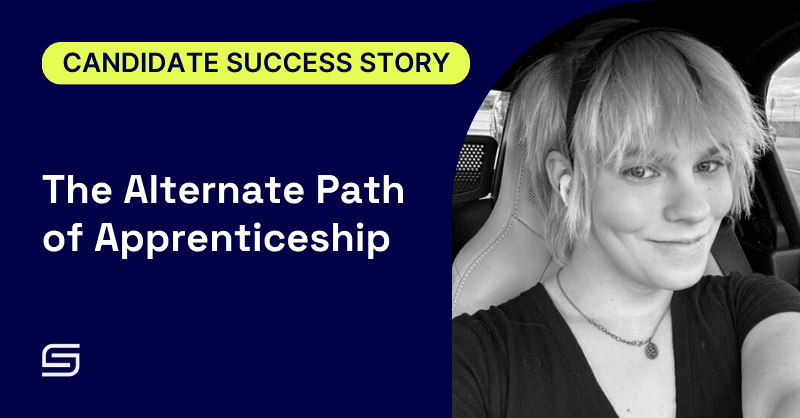
From early STEM mentoring to hands-on system administration, Emerson Iaquinto has always pushed the boundaries of what’s possible in her tech journey. Today, she’s a Data and AI Specialist at Accenture Federal Services, but her path wasn’t traditional. When she realized her technical skills were outpacing her coursework, she chose a different direction. She moved to Texas, joined Smoothstack as a software engineering apprentice, and immersed herself in practical, real-world training. That decision changed everything. She deepened her technical mastery, accelerated her growth, and found her confidence as a builder and future leader. Her journey shows the power of apprenticeship pathways in developing the next generation of tech talent. Check out Emerson's story 👇
At Louisville AI Week, one theme became increasingly clear across sessions, roundtables, and informal conversations. Organizations are not struggling to define their AI strategies. They are struggling to build the workforce capacity required to execute them at scale. Read more 👇
Training shouldn’t happen in isolation. Smoothstack’s MEI™ (Mirrored Environment Immersion) framework places engineers inside environments modeled after real enterprise systems so they develop context, judgment, and operational fluency before day one. It’s the bridge between preparation and performance. Read more 👇
AI has reset expectations for early-career talent in tech. Today, it’s not just about what you know. It’s about how quickly you can learn, how effectively you apply judgment, and how you operate inside AI-enabled teams where speed and adaptability matter. What to Expect in Today’s Tech Job Market explains how employer expectations have shifted, how AI is reshaping early roles, and why your first job sets the trajectory for long-term growth. It highlights the technical skills, professional habits, and problem-solving abilities that help new graduates build early momentum. If you’re preparing to enter the tech workforce, this guide offers a clearer view of what the market actually demands. 👇 Check it out
AI is speeding up how work gets done. But speed alone does not build capability. As intelligent systems take on more execution, many of the human skills that once developed through experience are used less often. Reasoning, judgment, and problem decomposition do not strengthen without practice. Simulation-based learning addresses this gap by placing engineers in realistic environments where they must reason through problems, navigate ambiguity, and make decisions with consequences. Explore why this approach is becoming critical for building teams that can think and operate effectively in environments shaped by AI
Chris Coligado and Boris Kuiper represented Smoothstack at the U.S. Department of Labor HIRE Vets Medallion Awards yesterday, marking the first in-person ceremony since 2019. Being recognized with the 2025 Gold HIRE Vets Medallion Award reflects what matters most to us: creating real, skills-first pathways for veterans into meaningful, high-growth technology careers. Proud of this team. Proud of the mission. And energized to keep building what comes next. 💙 #HireVets #VeteransInTech #VeteranHiring #Smoothstack #WorkforceDevelopment